Five Numbers to Settle Before a Rice Packing Machine Quote
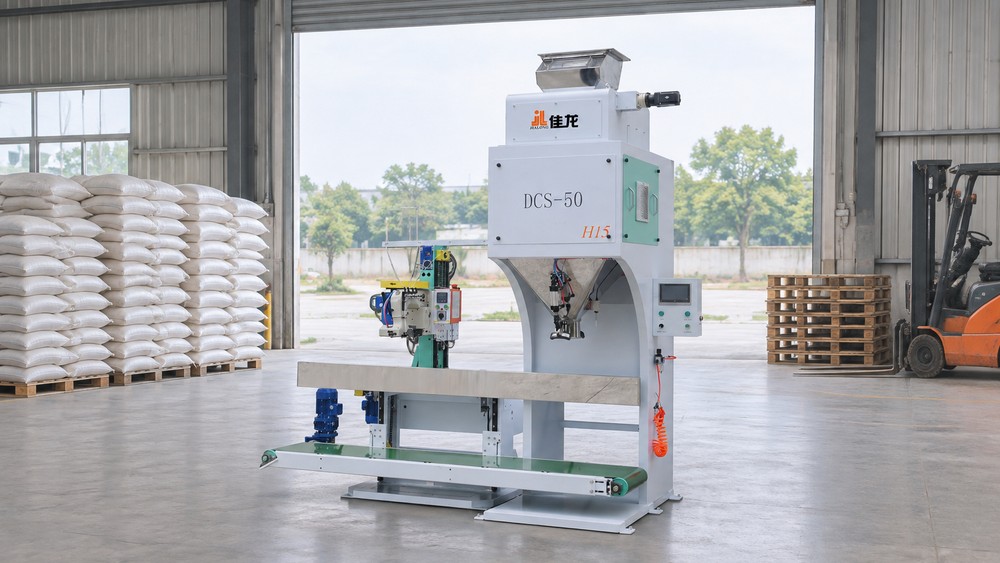
Nine out of ten quotations for a rice packing machine begin with two numbers: bag weight and bags per hour. Both are usually guesses. The buyer reads the hourly rate off a competitor's brochure, and the seller hedges on it because the buyer has not yet said what the mill actually runs. A rice bagging machine is priced from five inputs, not two, and four of them come from your own records rather than the seller's. Settle them in this order and the quotation stops moving.
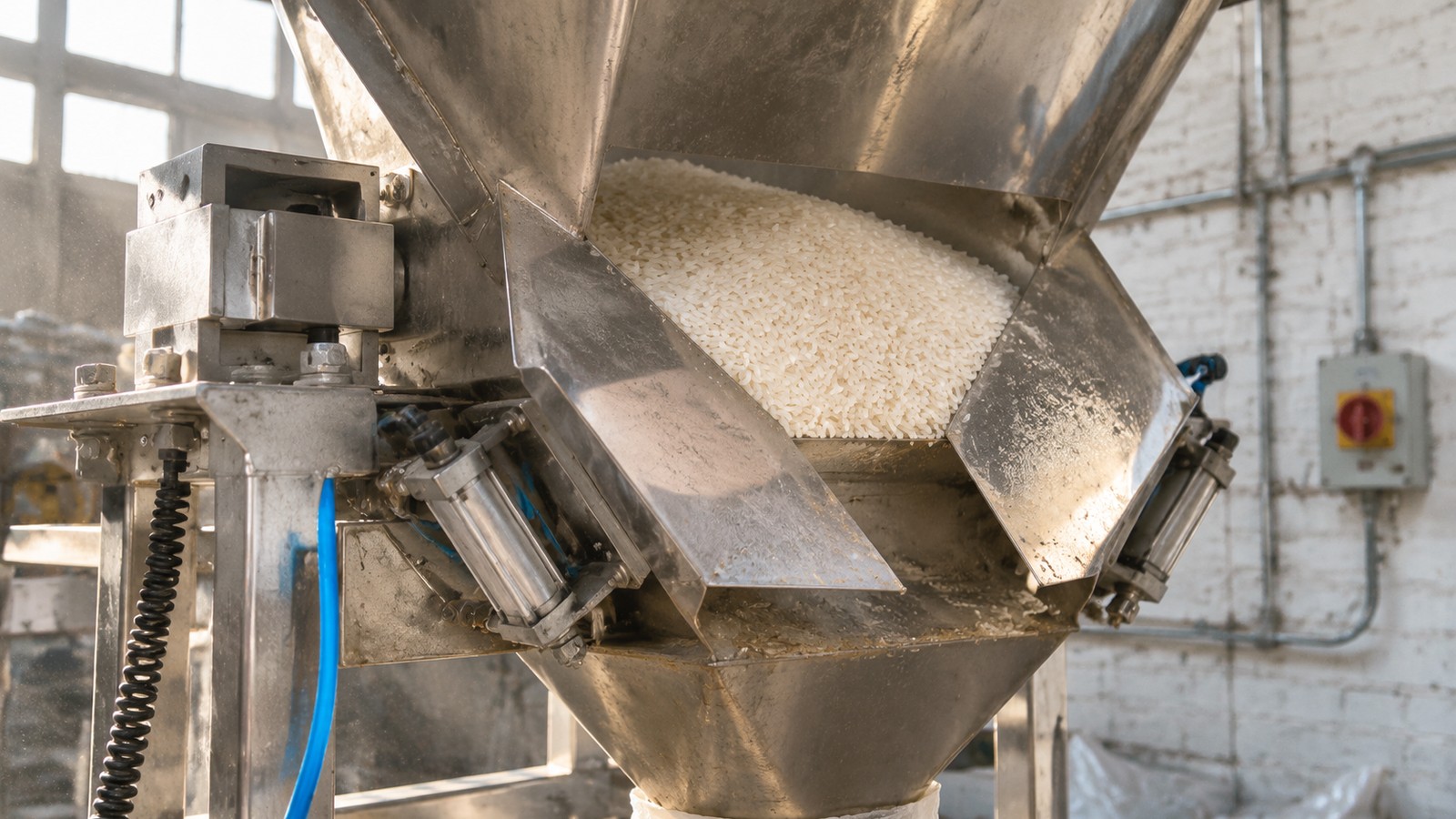
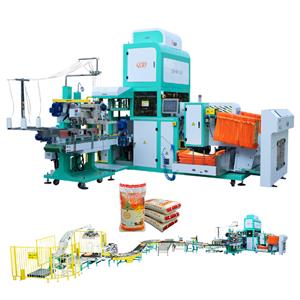
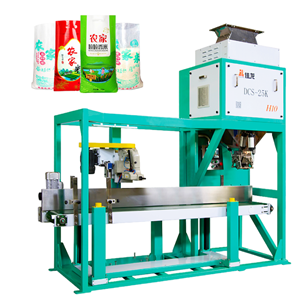
Rice leaving the weigh hopper into a 25 kg woven sack, the point where bag weight is actually set.
1. What the line actually runs on a normal day, not a good one
Ask the mill for last month's dispatch records. Not the capacity, the dispatch. A mill rated at 600 bags an hour often ships 380, because the dryer runs slower than the rice bagging machine and the bagger waits. If you buy 600, you paid for 220 bags an hour of idle capacity on the rice packing machine, and the rice bagging line still ships the same 380. If you buy 400 and run two shifts, the same tonnage leaves the gate and the deposit stays in the bank. The number to write on the quotation is the daily dispatch tonnage divided by the working hours you are willing to run. Nothing else belongs there.
2. The weight spread you will be judged on, not the accuracy you were sold
Accuracy is quoted two ways. Static accuracy is what the load cell on a rice weighing and bagging machine does with a single test weight at rest. Dynamic accuracy is what the rice bagging line does at 40 bags a minute with grain falling into a bucket. The gap between them is where contracts are lost. A rice weighing and bagging machine sold at plus or minus 2 grams static typically holds plus or minus 8 grams dynamic on 25 kg bags. Over 20,000 bags that is 160 kg of rice leaving the gate unpaid for, or arriving as a giveaway, depending on which side of the tolerance you land. Ask for a dynamic figure at your target speed and bag weight. If the seller cannot produce one, the static number is decoration.
3. The bag, because the machine is built around it
A 25 kg woven PP bag and a 25 kg laminated paper bag are not the same order. The first wants a filling spout and a sewing head. The second wants a heat sealer and a former, and it costs roughly three times as much per bag. A rice weighing and bagging machine that handles both does neither well. Measure a bag from your current supplier before you sign anything: flat width, gusset, length, and the thickness of the laminate. Then ask the builder to quote against those four numbers. A quotation that says dddhhh10 to 50 kg bagsdddhhh has not been written for you.
4. Air and power, which nobody quotes and everybody pays for
A 25 kg bagger with a vacuum chamber pulls about 0.9 cubic meters of air per minute at 0.7 MPa when it seals once per cycle. Most quotations for a rice bagging line state 0.6. The difference shows up as a compressor that runs at full load all shift, and a compressor running at full load is the loudest thing on the floor. Ask for the air demand per cycle, not per minute, then multiply by the cycles you actually run. Do the same for power: an 18.5 kW installed load with a 60 percent duty cycle is not an 18.5 kW bill.
5. The payback you can defend to your own accountant
Add the labour the rice bagging machine removes, the giveaway it stops, and the film or bag it saves. Divide the delivered price by that sum. If the answer runs beyond three years, the rice packing machine is a want rather than a need, and it can wait until the volume justifies it. One mill in Jiangxi ran this arithmetic on a 950 bag per hour rice bagging line and found payback at 19 months, almost entirely from stopping a 30 gram per bag giveaway on 25 kg bags. The rice bagging machine was not faster than the one they already had. It weighed better.
What to do with these five numbers
Put them on one page and send that page with your enquiry. A builder who answers all five is quoting your rice bagging line. A builder who answers two and asks for a call is quoting a catalogue, and the price will move twice before the container ships. Three of the five come from your dispatch records and your bag supplier, so you can produce them this week. The other two come from asking a question the seller would rather you did not ask. A rice packing machine bought on two numbers is bought on the seller's terms; bought on five, it is bought on yours.